Commissioning sacred artwork is one of the most significant endeavors a parish, temple, or faith community can undertake. A single piece of sacred art does far more than fill an empty wall: it shapes the devotional life of a community, directs minds toward the divine, and acts as a visual legacy for generations to come.
Yet, despite the best intentions, many religious organizations navigate the commissioning process with missteps that lead to mismatched aesthetics, unexpected costs, or artwork that fails to resonate spiritually.
At Paradise Found Studio, we partner with faith communities to bring transcendent sacred visions to life. To help your committee navigate this sacred journey smoothly, here are the top five mistakes religious organizations make when commissioning sacred art, along with how you can avoid them.
1. Choosing Subject Matter Without Architectural Context
A common mistake committees make is selecting a painting, mosaic, or sculpture in total isolation from the physical environment in which it will live. Sacred art does not exist in a vacuum; it responds to sightlines, ambient lighting, ceiling height, and existing architectural details.
The Fix: Invite your sacred artist into the physical space, or provide high-resolution architectural schematics and lighting profiles early in the process. True sacred art feels like an organic extension of the holy sanctuary, not an afterthought.
2. Prioritizing Personal Preference Over Sacred Tradition & Theology
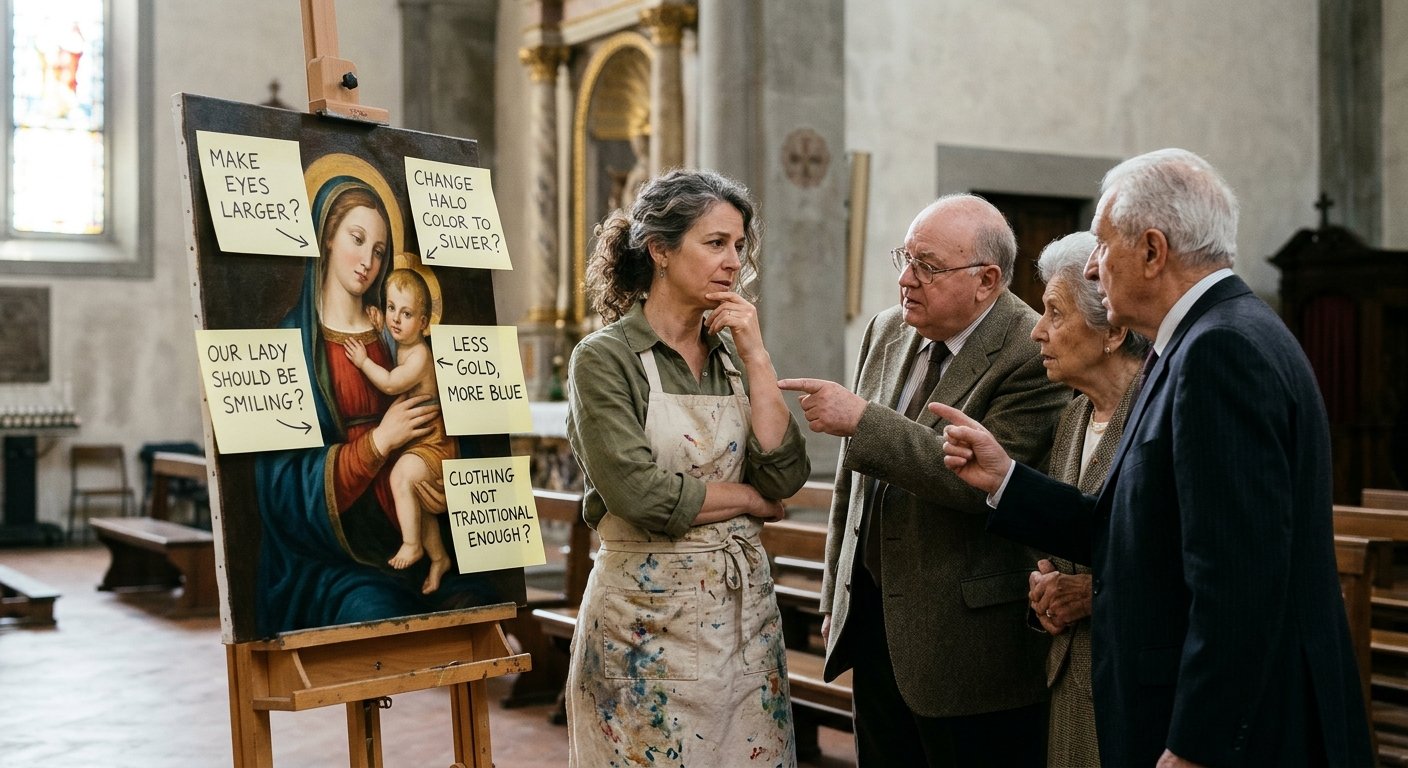
Artistic taste is subjective, but sacred art must transcend individual preference. When a building committee designs by consensus around personal likes and dislikes, the resulting piece often lacks theological depth or visual clarity.
Sacred imagery relies on established iconographic symbols, color theology, and historical continuity to serve its liturgical purpose. When personal trends take over, the spiritual endurance of the piece is compromised.
The Fix: Root your commission brief in scripture, theology, and historic sacred traditions. Trust an experienced sacred artist to translate deep spiritual truths into visual harmony rather than micro-managing aesthetic choices.
3. Designing by Large Committee
"Too many cooks in the kitchen" can stall even the most inspired art project. When a committee of ten or fifteen people all attempt to provide direct feedback to an artist, the artistic direction becomes diluted, contradictory, and stressful for everyone involved.
The Fix: Form a dedicated subcommittee to gather community feedback, but designate one single point of contact to communicate directly with the artist. This ensures clear instructions, stays on schedule, and protects the creative vision.
4. Failing to Establish a Clear Timeline and Budget Early On
Creating authentic sacred art is a labor of contemplation, precise craftsmanship, and traditional techniques. Committees often underestimate the time required for research, preliminary sketch approvals, material sourcing, and execution. Furthermore, ambiguous budgets often overlook hidden costs like specialized installation, shipping, or conservation prep.
The Fix: Be transparent about your budget from day one. Establish a realistic milestone schedule that accounts for review phases, seasonal liturgical deadlines (such as Easter or Feast Days), and safe installation logistics.
5. Treating the Process as a Transaction Rather Than a Ministry
Sacred artwork is not standard commercial illustration; it is a liturgical craft rooted in prayer, contemplation, and devotion. Treating the commissioned artist simply as a vendor limits the spiritual depth that can be poured into the work.
The Fix: Approach the project as a collaborative spiritual partnership. Pray for the project, engage in open dialogue with the artist about the spiritual needs of your congregation, and invite your community to follow along with the creative journey.
Bringing Beauty Home
Commissioning sacred art is an act of faith and a gift to future generations. By honoring the architectural space, committing to clear theological vision, and fostering a collaborative relationship with your artist, your organization can avoid these common pitfalls and create a masterpiece that inspires awe for years to come.
Are you ready to bring custom sacred art to your sanctuary, chapel, or home? Explore our portfolio or contact Paradise Found Studio today to discuss your vision.